

How to Turn a YouTube Video Into a Mind Map
Turn YouTube videos into mind maps by organizing the key question, sections, claims, examples, and parts to rewatch.
YouTube videos are easy to save but hard to find again. Turning a video into a mind map helps you keep the key question, important sections, examples, and parts to rewatch in one structure.
Why Videos Need Structure
Videos move in time, so specific information can be hard to find later.
Structuring the video lets you revisit the content by topic instead of by timeline alone.
Use Captions and Chapters to Find Sections
YouTube captions and chapters are good starting points for structuring a video.
Repeated keywords and transitions often reveal the important sections.
Separate Claims, Examples, and Rewatch Points
A claim is close to the video’s conclusion, while an example helps explain it.
Rewatch points should be saved with timestamps or questions.
Organize Lecture Videos Around Concepts
Lecture videos require more concept-focused structure than general videos.
Definitions, examples, questions, and review points should stay connected.
Create YouTube Structure Maps in Brify
Brify lets you keep the key question, claims, examples, and rewatch sections of a video in a structure map.
That makes the video easier to review or use as source material later.
A Practical Workflow
To apply YouTube mind map in real work or study, first think less about making a pretty diagram and more about what you need to find again later. A mind map is useful for branching from a central topic, but in serious study and work, the relationships between claims, evidence, examples, and conditions matter even more.
First, write the core question the material is trying to answer. Second, scan the text, transcript, document, notes, or summary for repeated themes and important conclusions. Third, separate the evidence and examples that support those conclusions. Fourth, mark the source locations or uncertain points that should be checked again.
This turns an AI mind map into a reusable structure rather than a visual decoration. The longer the source material is, the more important this structure becomes. Articles, PDFs, YouTube videos, lecture notes, meeting documents, and research summaries are all easier to reuse when their logic is visible.
How to Structure It in Brify
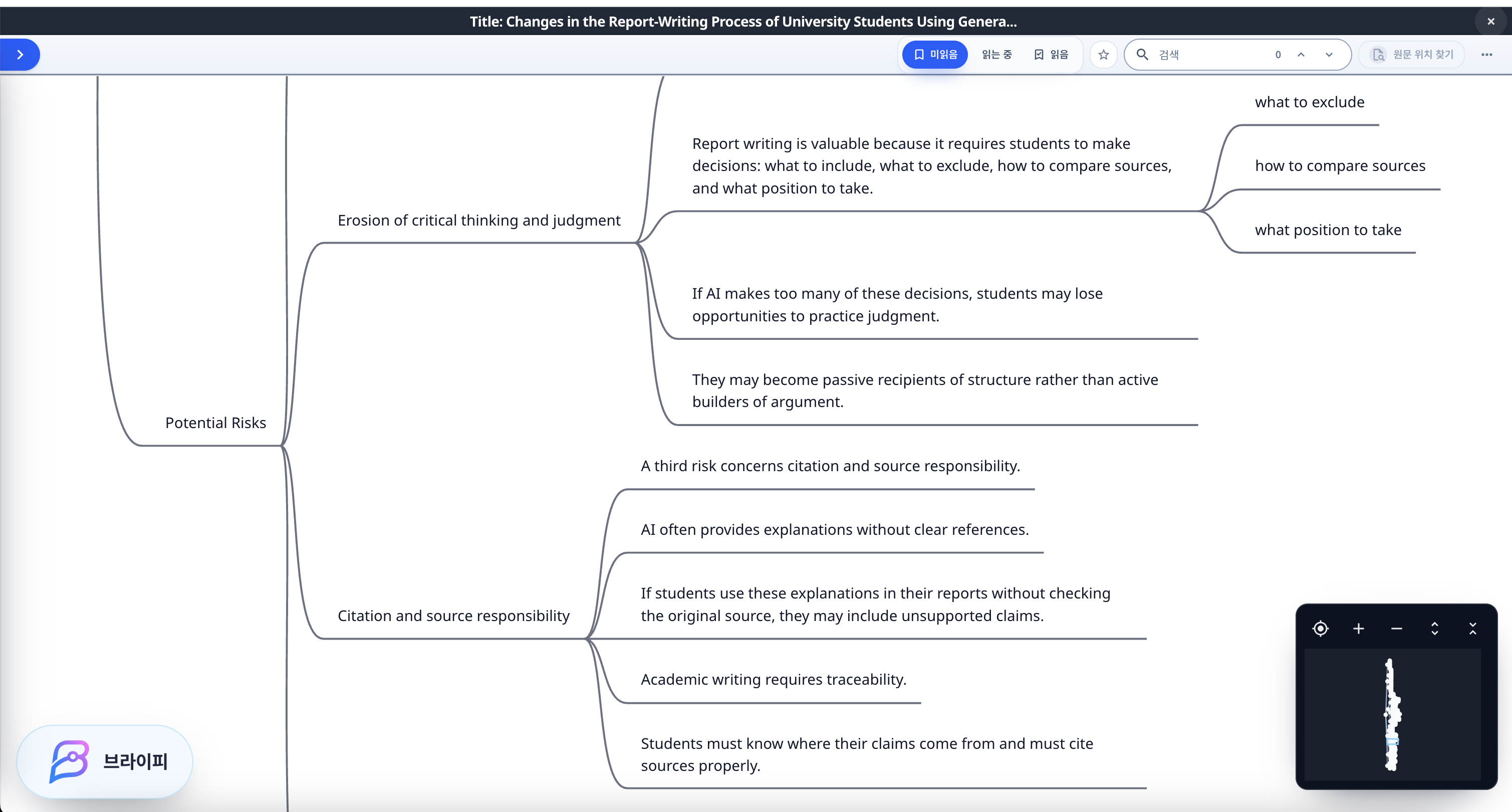
In Brify, you can organize YouTube mind map with nodes such as key question, main topics, conclusion, evidence, examples, points to verify, and next actions.
This gives you a view that feels like a mind map but works more like a practical structure map. You can see which argument is supported by which evidence, which example matters most, and what still needs to be checked against the original material.
That is why Brify emphasizes AI structure maps. A fluent AI summary can be useful, but it is not enough when you need to study, report, present, or make a decision. The structure behind the summary should remain visible and editable.
Common Mistakes
The first mistake is treating an AI mind map as a finished visual result. A clean layout can still be weak if it misses the core question, the evidence, or the conditions behind a conclusion.
The second mistake is confusing summarization with structuring. A summary makes content shorter. Structuring makes the shortened content easier to inspect, verify, and reuse.
The third mistake is trusting AI categories without review. AI can group topics too broadly, skip important evidence, or make a cautious conclusion sound stronger than it really is. A useful map should leave room for human checking.
What to Do Today
If you want to start working on YouTube mind map today, choose one long source and write only three things first: what question does this source answer, what is the most important conclusion, and where is the evidence for that conclusion?
Then place the key question at the center of a Brify map and connect topics, conclusions, evidence, examples, and verification points around it. The first map does not have to be perfect. What matters is leaving a structure that helps you regain the context later.
Start small. Turning one article, one PDF, or one video into a structure map is enough to feel the difference between a short summary and a reusable knowledge structure.
Final Thoughts
A YouTube mind map is a structure for finding and reviewing video knowledge. Use Brify to turn videos into maps you can revisit.