

What to Check When Using AI for a Literature Review
When using AI for a literature review, check search scope, paper selection, source evidence, citation context, and research gap interpretation.
AI can make literature review work faster. But a literature review still requires research judgment, so AI output should be checked structurally rather than accepted as final.
What AI Can Help With
AI can help scan long papers, extract themes, summarize findings, and suggest early structure.
It is especially useful during early exploration and first-draft planning.
Do Not Trust Paper Selection Blindly
AI may miss important papers, include weakly related studies, or reflect a narrow search scope.
You need to be able to explain the selection criteria yourself.
Check Source Evidence and Citation Context
Always compare AI summaries with the original source. Citation context, cautious wording, and limitations can be flattened.
A fluent summary is not the same as a verified literature review.
Review the Research Gap Yourself
AI may suggest research gaps too quickly. A real gap must be grounded in differences, limitations, and missing questions across studies.
Treat AI-generated gaps as candidates, not conclusions.
Use Brify to Review AI Output
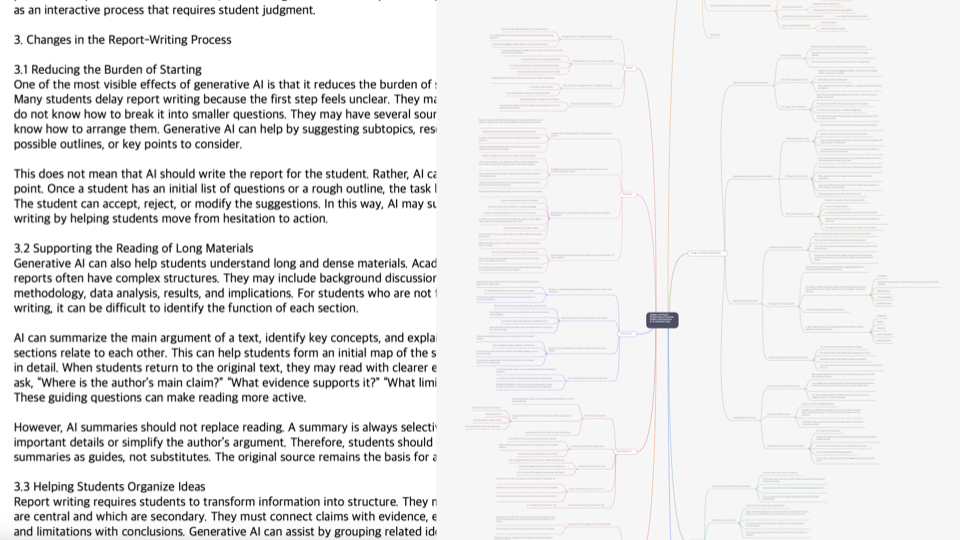
Brify can turn AI-generated literature review notes into a structure map for checking gaps, sources, and overstatements.
This lets you combine AI speed with human research judgment.
A Practical Workflow
To apply what to check when using ai for a literature review in a real research workflow, start by gathering the papers you already have in one place. Then avoid jumping straight into writing. First, turn each paper into comparable information.
Write one sentence for the question your literature review needs to answer. Separate papers that directly support that question from papers that only provide background. For each paper, record the research question, population or material, method, main finding, limitation, and relevance to your own project.
Once those fields are consistent, patterns become visible. You can see which claims repeat, which methods dominate the field, which findings disagree, and where your own research question might fit.
How to Structure It in Brify
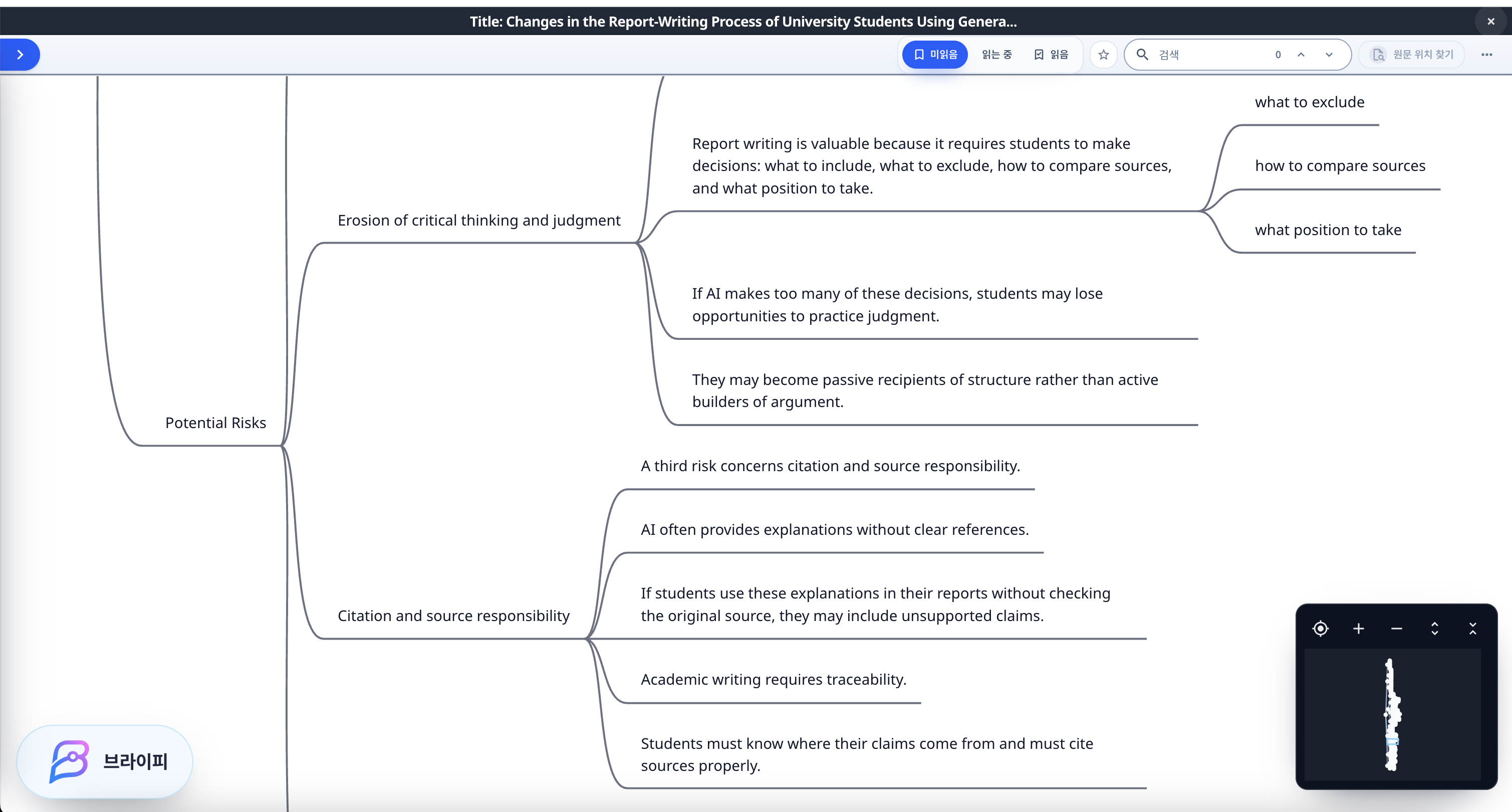
In Brify, you can organize AI literature review around nodes such as research question, paper groups, method differences, result differences, limitations, research gaps, and connection to your own project.
The goal is not to create another isolated note for every paper. Place each paper under a theme, debate, method, or gap. Papers that make similar claims can sit together. Papers that disagree can become a separate branch, which makes the logic of the review easier to explain later.
It also helps to mark what is already clear and what still needs checking. A literature review is not finished in one pass. It becomes stronger through reading, comparison, revision, and source verification.
Common Mistakes
The first mistake is organizing papers in the order you read them. Reading order is not the same as review logic. Readers do not need to know which paper came first in your workflow; they need to understand how the field has discussed the problem.
The second mistake is giving every paper equal weight. In a literature review, some papers are central evidence, while others provide context. Treating every paper the same makes the review longer but not clearer.
The third mistake is declaring a research gap too quickly. Before saying that no one has studied a question, check your search terms, scope, adjacent concepts, and similar studies. A research gap needs evidence, not just intuition.
What to Do Today
If you want to start working on AI literature review today, choose only three papers and organize them with the same criteria. Three papers are enough to reveal repeated themes, missing details, and possible gaps.
Then write one sentence for each paper: why does this paper matter for my research question? If the sentence is hard to write, the paper may not be central to your review. If the sentence is clear, the paper may deserve deeper reading and citation tracking.
Small steps are fine. What matters is that every reading session leaves behind a structure that helps the next reading session and the next writing session.
Final Thoughts
AI can speed up literature review work, but the structure still needs verification. Use Brify to inspect and revise AI output before trusting it.