

Paper Summary Tool Comparison: What Matters Beyond a Short Summary
Learn how to compare paper summary tools by research question, method, results, limitations, citation review, and literature review use.
When choosing a paper summary tool, it is not enough to ask whether it can show the conclusion quickly. Academic papers depend on structure. You need to see the research question, method, results, limitations, and whether the paper can actually be used in a literature review.
Paper Summaries Are Different From General Summaries
A general document summary can often succeed by shortening the main points. A paper summary has to preserve the research structure.
The conclusion is only one part of the paper. Research question, relation to prior work, methodology, data, results, and limitations all need to remain visible for study or research use.
Is Abstract Summarization Enough
The abstract is a compressed introduction, but it is not the whole paper. Method conditions, experiment scope, and limitations often require checking the main body.
That is why paper summary tools should be compared by how well they separate the paper structure, not only by how smoothly they shorten the abstract.
Can It Separate Question, Method, and Results
A useful paper summary tool should separate the research question, methodology, and results. If these are mixed together, citing or comparing the paper becomes confusing.
For literature reviews, you need to know what each paper asked, how it tested the question, and what it found. That structure is more valuable than a polished paragraph.
Can It Mark Limitations and Review Points
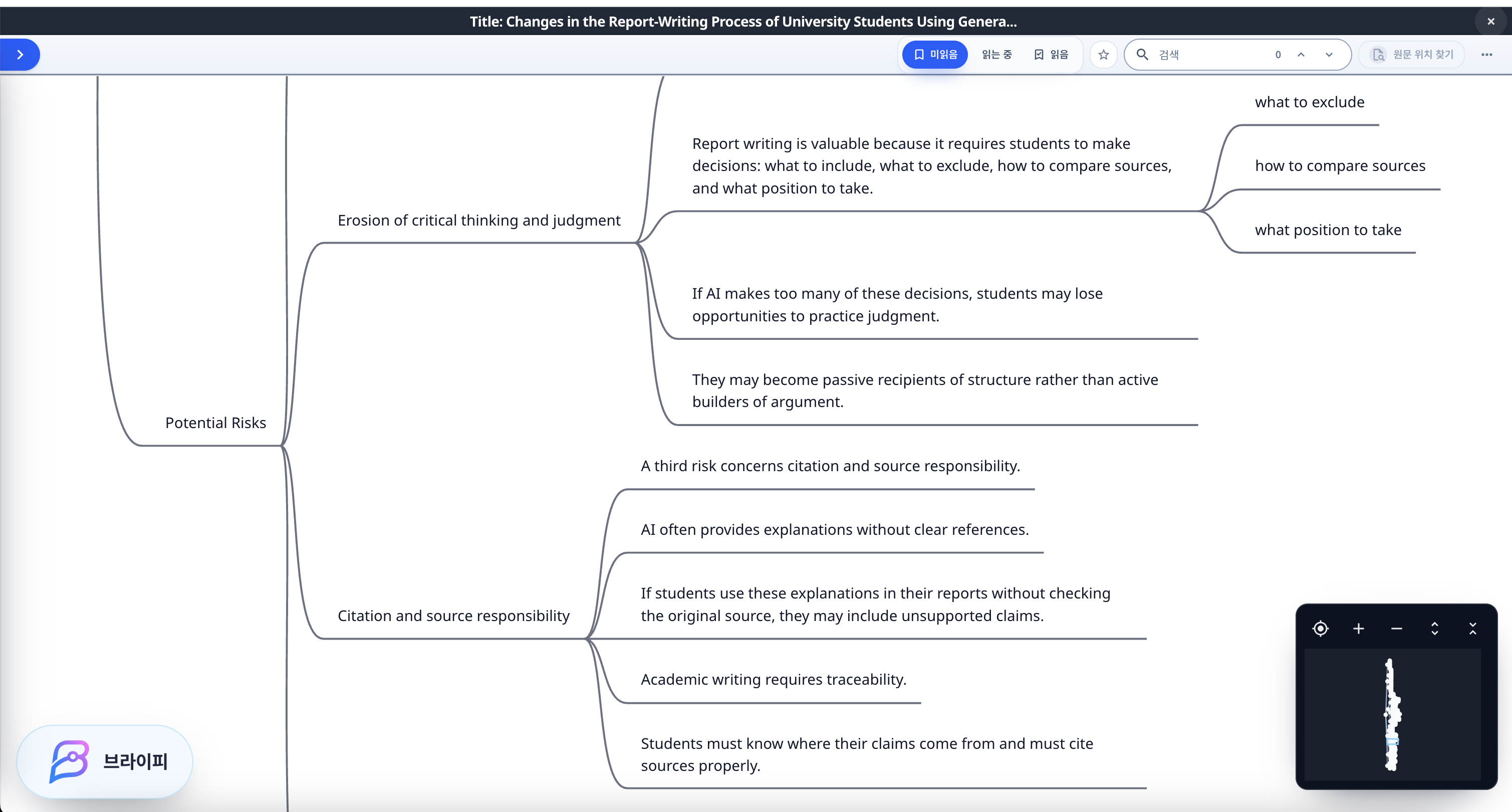
If a summary misses limitations, the results may sound stronger than they are. Sample size, experimental conditions, data scope, and future work should be kept visible.
Even when an AI summary sounds natural, missing limitations can create problems in a literature review or report. The tool should leave points that need source review.
How Brify Structures Papers
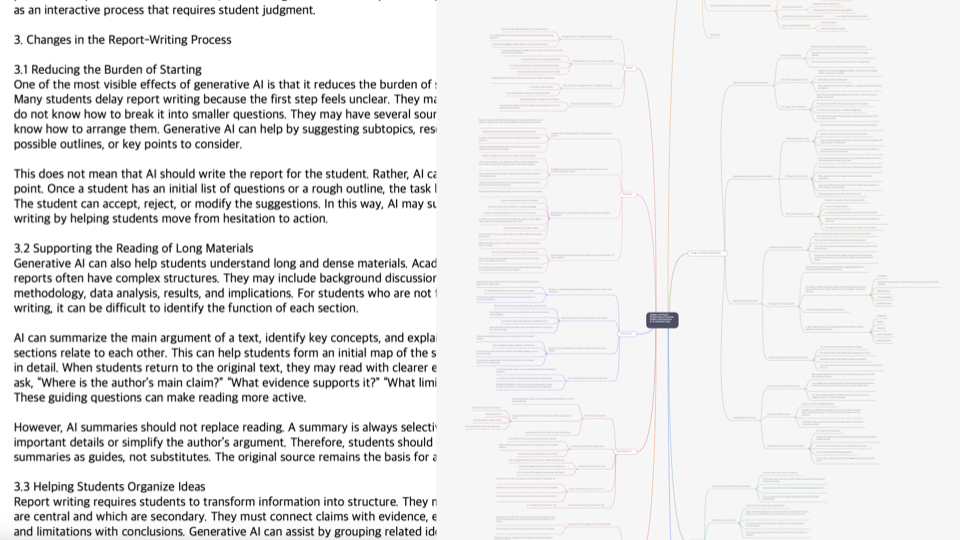
In Brify, a paper can be organized into a structure map with research question, key claim, method, result, limitation, and citation candidate nodes. This is easier to transfer into a literature review than a conclusion-only summary.
When comparing paper summary tools, look for whether the tool leaves a structure you can review against the original source and compare with other papers later.
Paper Summary Tool Comparison Checklist
Check five things when choosing a paper summary tool: does it separate the research question, show method and data conditions, distinguish results from interpretation, preserve limitations and review points, and support later literature review or citation work?
If a tool fails these criteria, it may still be fast but not strong enough for research work. Papers need a review workflow, not just a shorter version.
Final Thoughts
The most important part of comparing paper summary tools is not the prettiest summary. What matters is whether the tool, like Brify, leaves research questions, evidence, methods, and limitations in a structure you can verify.