

How to Organize Report Materials When You Do Not Know Where to Start
Organizing report materials is not about collecting more sources. It is about sorting them into topic, claim, evidence, citation, and outline.
Report material organization often becomes difficult not because you lack sources, but because you have too many of them. You may have saved web pages, PDFs, articles, lecture slides, and parts of academic papers, but when it is time to write the first sentence, the whole pile feels unclear. At that moment, the next step is not more searching. It is reorganizing what you already have around the question your report needs to answer.
Why Report Materials Become Hard to Organize
When you collect materials, you usually move by search keywords. When you write a report, however, you need to move by questions and claims. A long list of saved sources does not automatically create a report structure.
Many people feel organized because they have file names, links, or source titles. But what a report really needs is a clear sense of what each source can support, what evidence it provides, and how reliable that evidence is.
Start by Writing the Report Question in One Sentence
Before reading everything again, write the question your report should answer in one sentence. For example, a question like 'How do AI summary tools change the way students study?' gives you a filter for deciding what matters.
Without a clear question, every source looks important. With a clear question, it becomes easier to separate background information, core evidence, counterarguments, and conclusion material.
Sort Sources Into Claims, Evidence, Examples, and Background
When organizing report materials, sorting by role is more useful than summarizing each source in isolation. Some sources are good for background, some support the main claim, and some work better as examples or counterpoints.
Once each source has a role, you can see where it belongs in the report. It stops being a pile of summaries and starts becoming writing material.
Keep Citation Points Separate
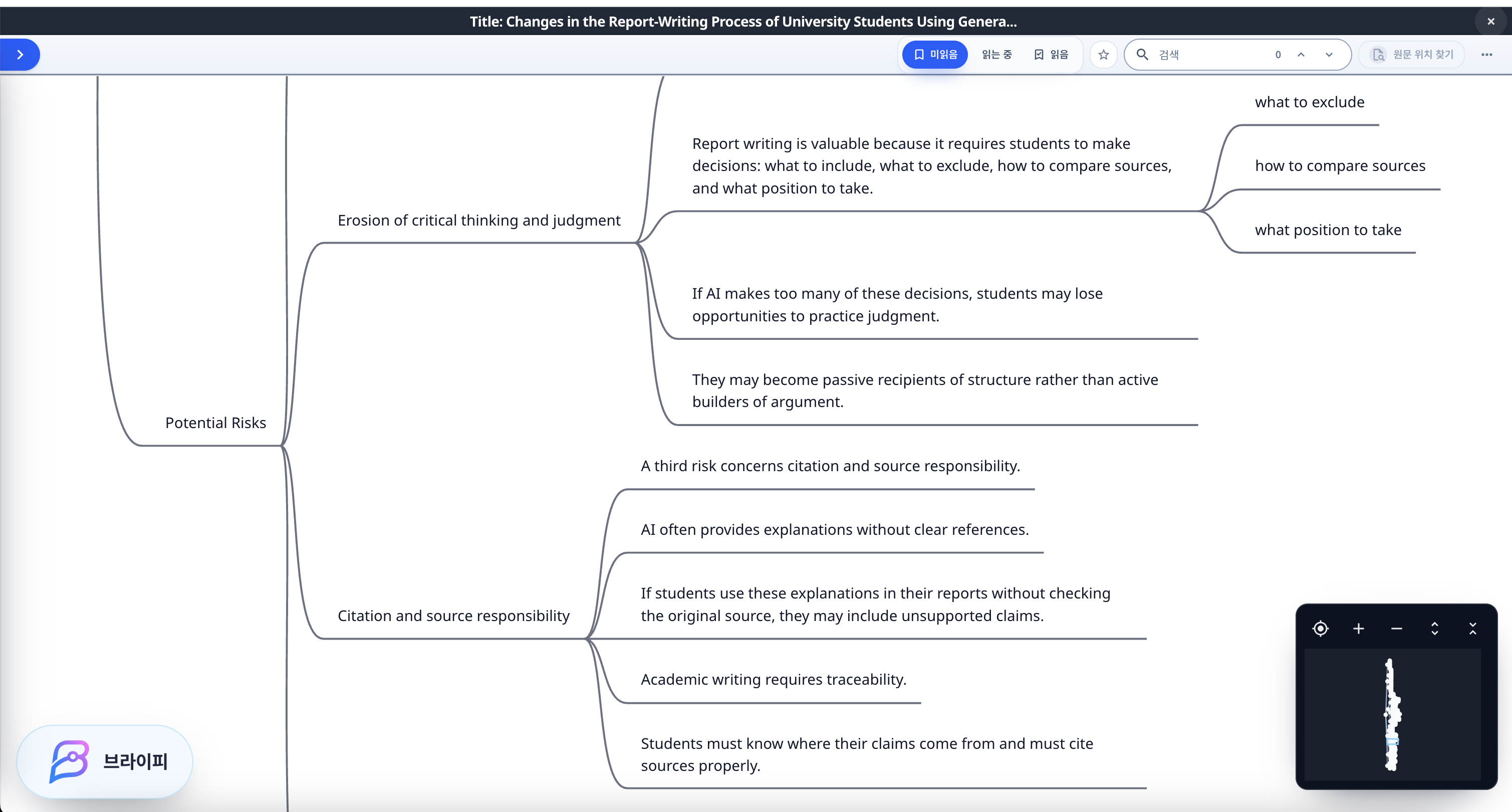
One of the easiest things to lose during material organization is the source. If you only copy a summary, you may later forget which document or page it came from.
Whenever you read a source, keep the title, author or institution, URL or page, and the sentence you may want to cite. This saves a lot of time near submission.
Build a Report Material Map in Brify
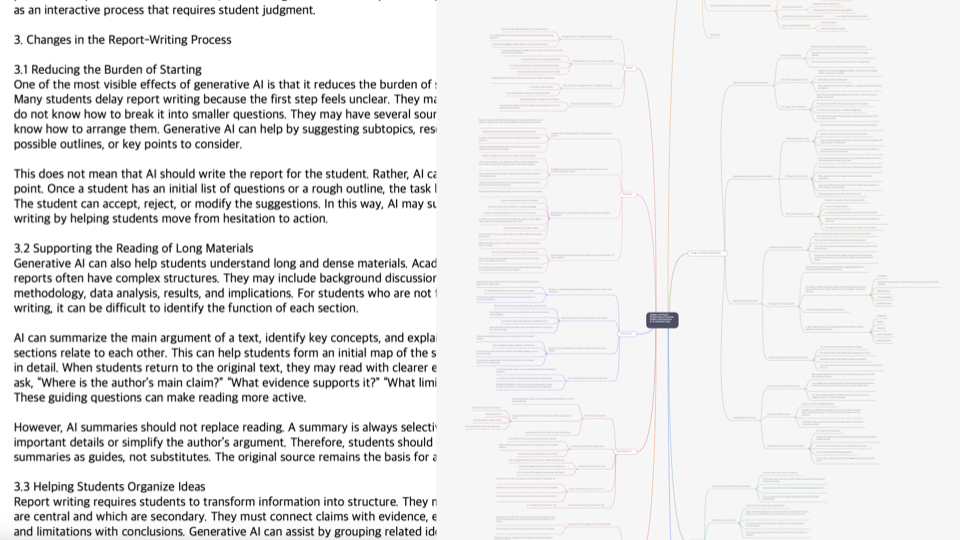
In Brify, you can place the report question at the center and connect claims, evidence, citations, examples, and counterarguments around it. This turns a file list into a logical structure.
Before drafting, the map helps you see which claims lack evidence, which sources overlap, and where citations are missing.
Turning Materials Into a Submission-Ready Structure in Brify
The most important point in How to Organize Report Materials When You Do Not Know Where to Start is that collecting materials and using them well are not the same thing. A report or assignment is not a list of sources. It needs to show how you understand the question, which claims you are making, and what evidence supports those claims.
In Brify, you can organize materials into a structure map with nodes such as assignment question, main claim, supporting source, citation point, your interpretation, outline candidate, and sentence ideas for the final report or presentation. This keeps an AI summary from becoming the final answer too quickly.
When you work with multiple sources, citations can get mixed together, similar ideas repeat, and the evidence you actually need may be missing. A structure map makes it easier to see which source supports which claim, where the gaps are, and what should be removed before you write.
When a Structure Map Helps Most
A structure map becomes especially useful when you have enough material but cannot build a report outline, when an AI summary is available but you cannot tell what came from the original source and what is your own interpretation, or when team project materials are scattered across messages, documents, and links.
It also helps when you are close to submission and suddenly need to find citations again. At that point, more summarization is usually not the answer. What you need is a clear connection between the assignment question, claims, evidence, and sources.
Pre-Submission Checklist
If you are working on organize report materials today, check four things: does this material directly answer the assignment question, does each claim have evidence and a source, are the original summary and your interpretation separated, and can the structure be turned into a report outline or presentation flow?
If those four things are not visible, the material is not fully ready for submission yet. Turning it into a Brify structure map connects understanding, citation checking, outline building, and presentation preparation in one workflow.
Final Thoughts
Organizing report materials is not a competition to collect more sources. If you first build a structure of question, claim, evidence, and citation in Brify, writing becomes much less blocked.