

How to Organize Meeting Decisions and Action Items
After a meeting, separate decisions, open issues, owners, deadlines, and next action items instead of keeping only a long transcript.
A long meeting note does not guarantee good execution. In many cases, everything discussed is written down, but it is still unclear who should do what by when. The purpose of post-meeting organization is not to preserve every sentence. It is to make execution stable after the meeting ends.
Why Long Meeting Notes Still Fail
Meeting notes can contain background, opinions, objections, temporary ideas, jokes, and decisions all together. If they remain in that form, action items are hard to find later.
After a meeting, the full record and the execution structure should be separated. Not every spoken point has the same importance.
Separate Decisions From Discussion
First, extract what was actually decided. Discussed and decided are not the same. Decisions become the reference point for future action.
Unresolved opinions should be kept as open issues or follow-up items, not written as if they were decisions.
Keep Open Issues and Missing Materials Visible
Issues that were not resolved in the meeting still matter. But if they are written like decisions, confusion follows.
For each open issue, note why it remains open, what information is missing, and who will check it.
Add Owner, Deadline, and Next Step
An action item needs more than a task sentence. It needs an owner, a deadline, and a completion condition.
For example, competitor research is vague. Check Company A’s new pricing policy by next Tuesday and add it to the comparison table is actionable.
Build a Post-Meeting Execution Map in Brify
In Brify, you can structure meeting content into decisions, open issues, missing materials, owners, deadlines, and action items.
With this structure, the next action and responsibility are visible without rereading the entire meeting note.
Turning Business Materials Into a Decision Structure in Brify
The important point in How to Organize Meeting Decisions and Action Items is not making the material shorter. It is organizing it so it can lead to the next judgment and the next action. Market research reports, competitor analysis, customer insights, and meeting materials are not only things to read. They are inputs for decisions.
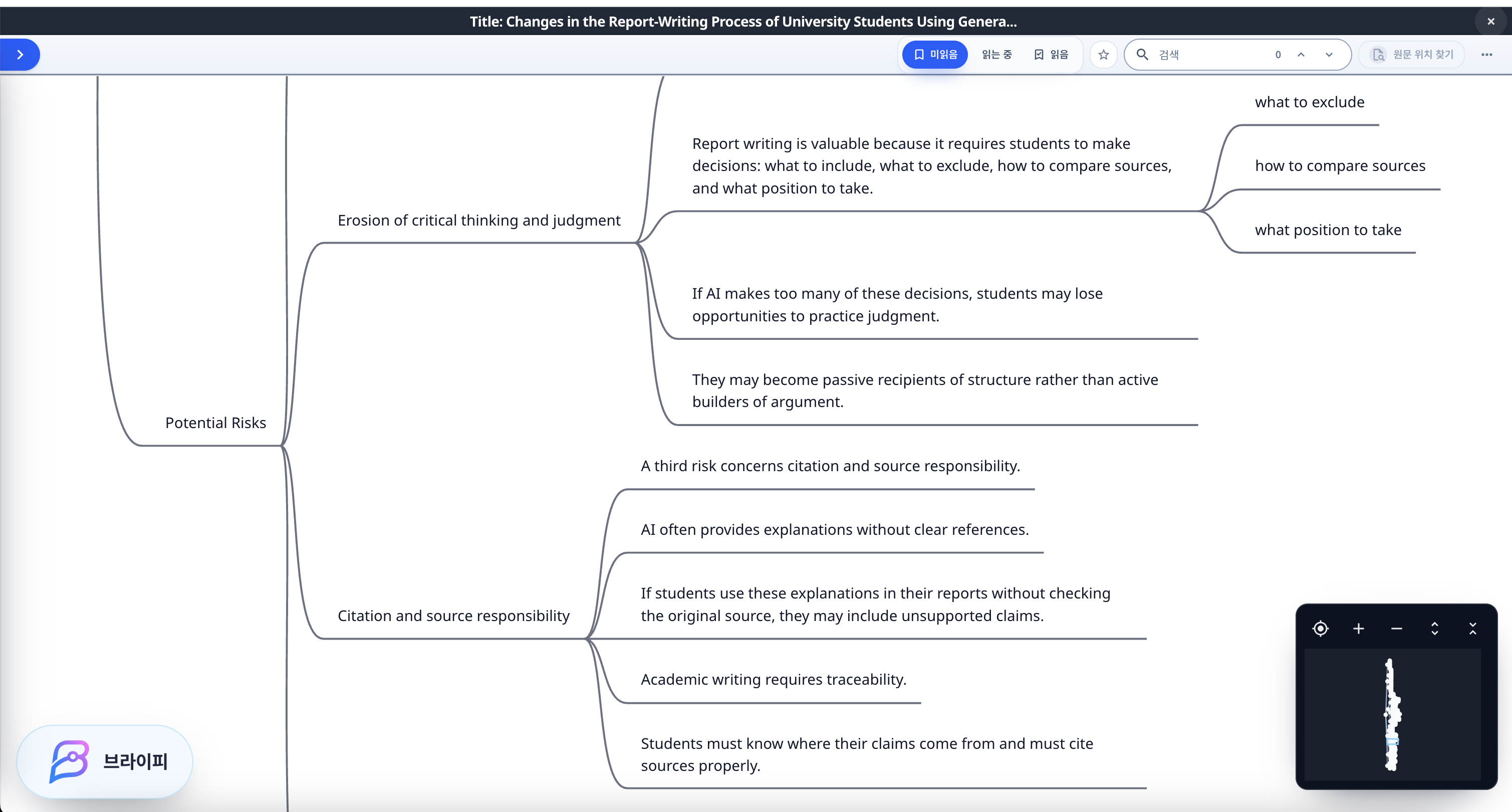
In Brify, you can turn business materials into a structure map with nodes such as core question, market/customer/competitor information, evidence, interpretation, open issues, decisions, action items, owners, and deadlines. This keeps research summaries and meeting notes from becoming scattered documents.
In real work, more information often makes the conclusion less clear. If numbers, customer quotes, competitor features, and meeting opinions are placed in the same paragraph, it becomes hard to tell what is fact, what is interpretation, and what needs to be done next.
When a Structure Map Becomes More Useful
A structure map is especially useful when you have read a market research report but cannot explain what it means for your product or project, when meeting materials are long but the actual decision is unclear, or when a meeting note exists but owners and next actions are vague.
It also helps when research findings and meeting decisions are stored separately and never become an action plan. At that point, the answer is not a longer summary. What you need is a structure that connects insight, decision, and action item.
Business Review Checklist
If you are working on organize meeting decisions today, check four things: what decision question does this material answer, are evidence and interpretation separated, are the meeting issues visible, and does the material connect to next actions and owners?
If those four things are not visible, the material may look organized but may not be ready for execution. Turning it into a Brify structure map connects research, meetings, and action planning in one workflow.
Final Thoughts
Post-meeting organization is about execution, not just record keeping. Use Brify to separate decisions and action items so the next work is immediately visible.