

NotebookLM vs. Brify: Why Long YouTube Lectures Should Be Organized as a Structure Map
If NotebookLM is strong at questions and answers, Brify helps organize long materials such as a 5-hour YouTube lecture into a structure map so they are easier to study again.
When people revisit a long YouTube lecture or other lengthy material, they often look for a “summary” first. But for long content, it is often more useful to capture the overall flow and the detailed evidence together, rather than simply reducing it to the main points. This is where NotebookLM and Brify differ quite a bit.
NotebookLM is strong at asking questions about source material and getting answers. It is well suited for finding specific sentences or expanding understanding through Q&A based on the material. Brify, by contrast, focuses on organizing long texts or long videos into a structure map so you can study the whole thing again. In other words, it is the difference between “a tool for getting answers quickly” and “a tool for rereading content in a structured way.”
How are summaries and structure maps different?
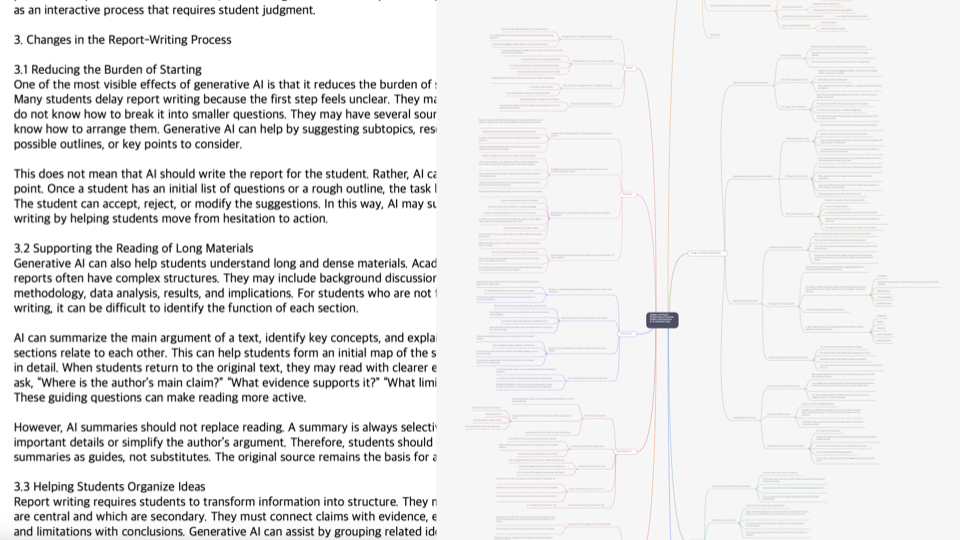
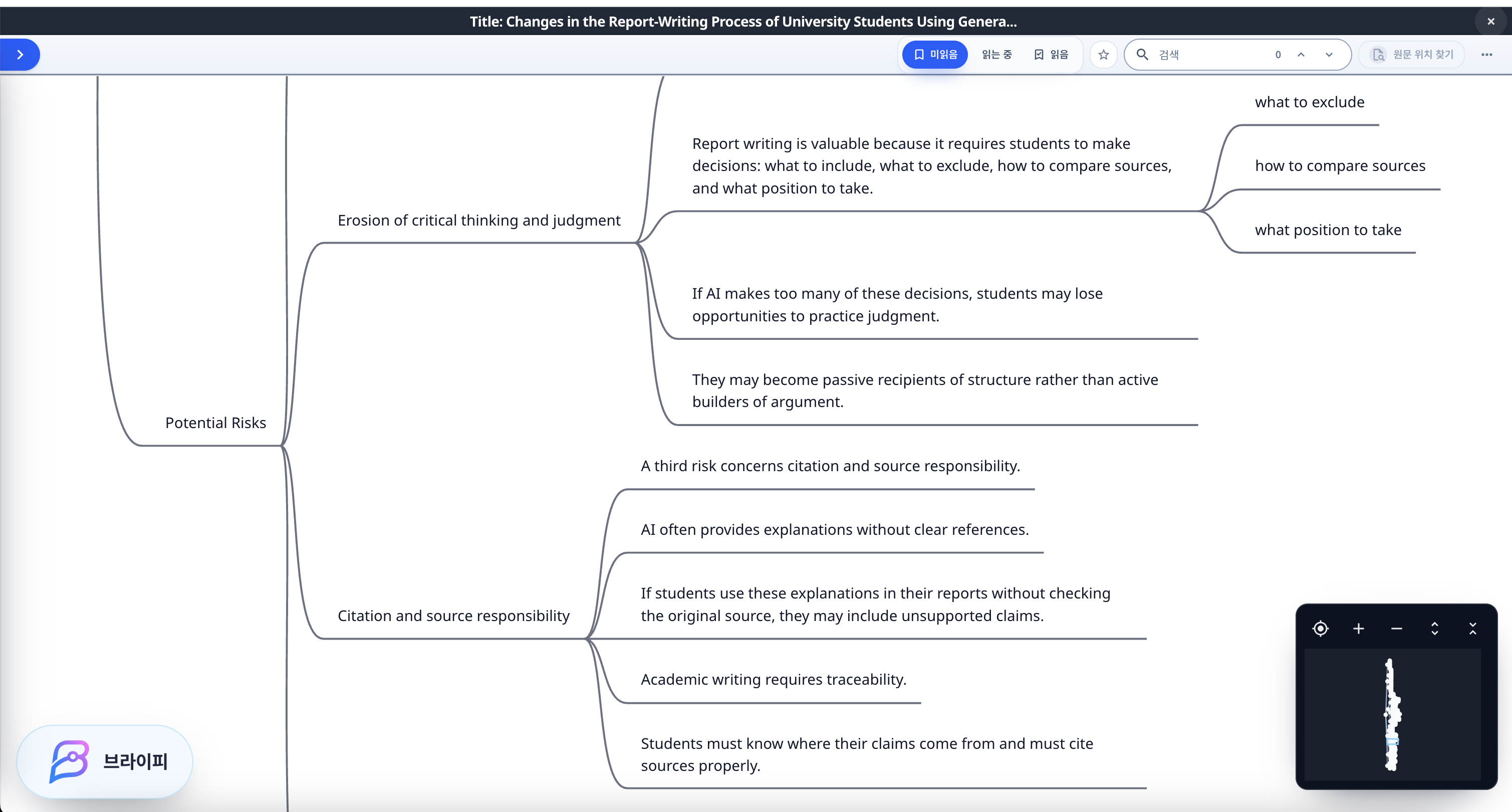
Summaries usually aim to reduce length. That makes them easier to read, but it also means intermediate logic, examples, and detailed conditions are often left out. A structure map, on the other hand, does not try to shorten the content so much as organize it into a structure that includes detailed information. Under each major topic, it preserves sub-claims, evidence, examples, and detailed explanations as leaf nodes, while grouping too much content under parent nodes by meaning so the overall flow is not lost.
This difference becomes especially clear with long materials such as a 5-hour YouTube lecture. A simple summary may tell you “what the lecture was about,” but it can blur “why that conclusion was reached,” “what examples were given in the middle,” and “which parts should be reviewed again.” Brify’s long-form mind map keeps that information inside the structure, which makes it much more practical for review.
Why Brify is useful for reviewing long lectures
Brify does not make you read a long lecture all at once. Instead, it shows the overall structure first. Users can see the big picture, then expand only the nodes they need to check the details. And because each node can take you back to the corresponding source trace, you do not have to accept the AI-generated organization as-is; you can review the original basis again.
This is especially important when organizing YouTube transcripts or lecture notes. Lectures usually connect context across the beginning and end, and examples or supplementary explanations often repeat in the middle. Because Brify structures this information visually, it is easier to understand both “what matters most” and “where to listen again” during review.
NotebookLM and Brify are different in role, not competition
If NotebookLM is strong at answering questions from source material, Brify is strong at document structuring for rereading, editing, and sharing long materials. So the two tools are less about solving the same problem in different ways and more about supporting different reading habits.
For example, if you want to quickly check lecture content and get an answer to a specific question, NotebookLM may be more convenient. On the other hand, if you want to study the entire lecture again and organize the flow, sub-claims, examples, and details without missing anything, Brify’s structure map is a better fit. This difference becomes especially clear for materials that need to be reused later, such as report organization, meeting notes, or sermon manuscripts.
What you can do in Brify
In Brify, you can highlight and edit the structure map directly. If needed, you can restructure it into a more readable form, share it, or save it as a PDF. The slideshow feature is a supporting function for presenting or reviewing the structure map content, but the core value is still preserving detailed information and checking the source trace.
If you want to turn long materials into something you can reread and review instead of simply shortening them, Brify may be a better fit. In particular, for tasks that require a long-form mind map, an AI mind map, or source trace verification, structure lasts longer than summary.