

When NotebookLM May Not Be Enough for Graduate Students
NotebookLM can help graduate students understand papers quickly, but paper comparison, evidence tracking, and research-gap organization may need more structure.
For graduate students, reading papers is not just about understanding them once. Papers need to be reused in advisor meetings, literature reviews, research proposals, and thesis writing. That is why fast Q&A alone can become insufficient.
Why Graduate Students Look for NotebookLM
There are too many papers to read and too little time.
Being able to understand the core of a paper quickly and ask questions is genuinely attractive.
Quick Q&A vs. Research Notes
Q&A answers the question you have right now.
Research notes need to preserve where the paper fits, what evidence it provides, what limitations it has, and how it connects to your own work.
Comparing Papers With the Same Criteria
Graduate students often need to compare several papers, not just understand one.
If research question, method, data, findings, and limitations are not organized with the same structure, comparison becomes difficult.
Keep Research Gaps and Your Project Visible
In a literature review, the goal is not only to know what each paper says.
You also need to identify open questions and connect them to your own research direction.
Build Paper Comparison Maps in Brify
Brify is useful for organizing papers with the same structure and comparing them over time.
You can use NotebookLM for fast understanding and Brify for long-term research notes.
How to Turn It Into a Structure Map in Brify
To use NotebookLM for graduate students in a real workflow, do not treat an AI answer or summary as the final result. NotebookLM and ChatGPT can help you understand material quickly, but research papers and study materials often need to be checked, compared, rewritten, presented, or reused later.
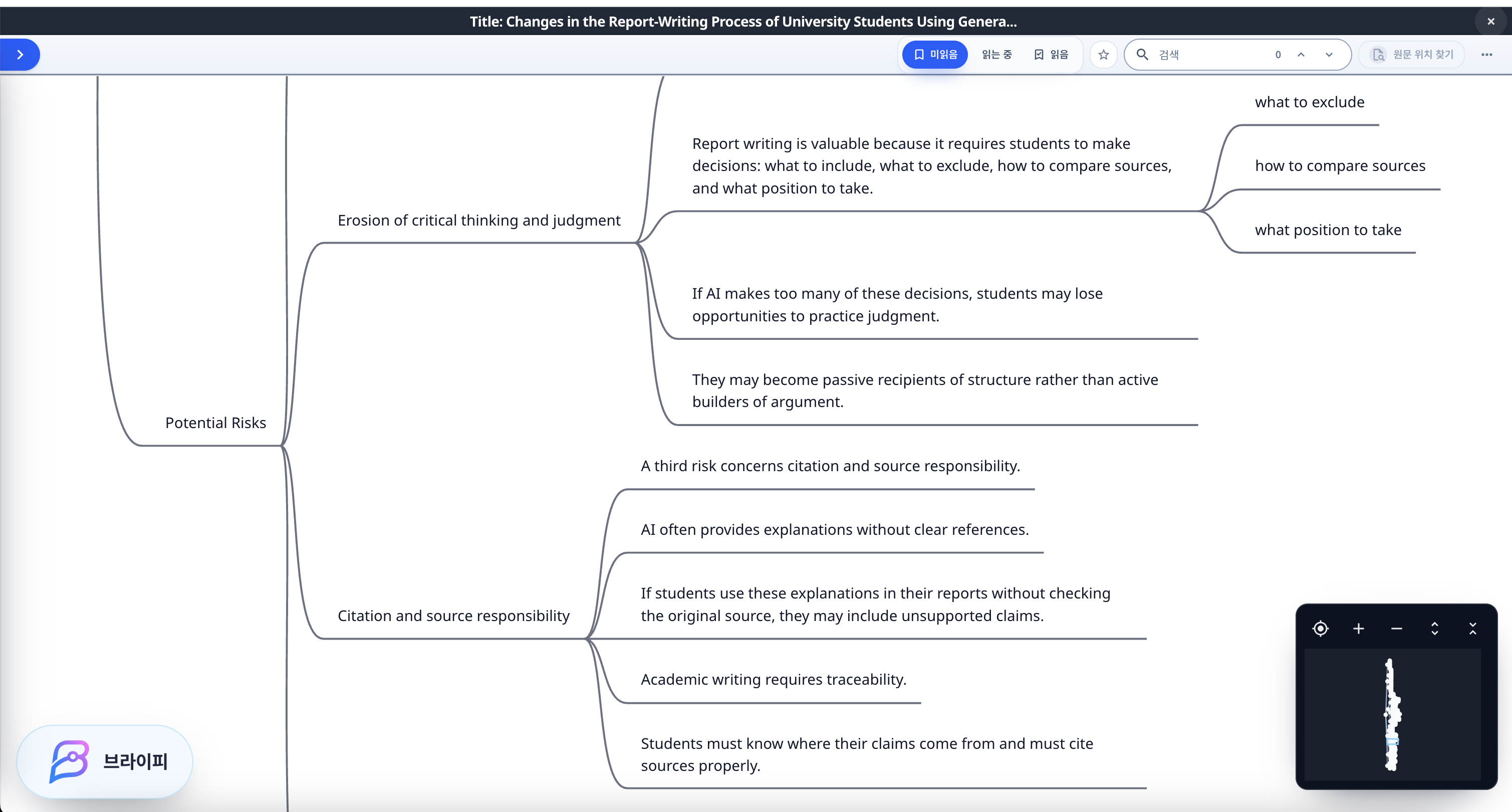
In Brify, you can organize material into nodes such as research question, main claim, method, findings, evidence, limitations, points to verify, and how you plan to use the material. This makes it easier to return to the original source, compare multiple papers with the same criteria, and avoid losing the logic behind a fluent AI summary.
For paper summaries, a natural-sounding paragraph is not enough. You need to know which part of the original source supports a claim, which conditions limit the conclusion, and whether the summary actually connects to your assignment, report, presentation, or research question.
When a Structure Map Matters More
A structure map becomes especially useful when you have an AI summary but cannot remember where the evidence came from, when several papers start blending together, or when you need to explain the material in a report or presentation but only have a paragraph summary.
It also matters when answers from NotebookLM or ChatGPT are copied into different places. Using more AI tools is not the same as having a better workflow. What matters is whether the results are gathered into one structure you can review and reuse.
A Quick Review Checklist
If you are reviewing NotebookLM for graduate students today, check four things: what is the core question, is the AI-generated conclusion connected to source evidence, are the method and limitations still visible, and can you reuse the material for writing, studying, or presenting?
If those four things are unclear, the summary may exist, but the organization is not finished. Turning the result into a Brify structure map connects fast understanding with verification, comparison, and reuse.
Final Thoughts
Graduate students need more than quick answers. They need accumulated research structure. Brify helps keep paper comparisons and research gaps visible.