

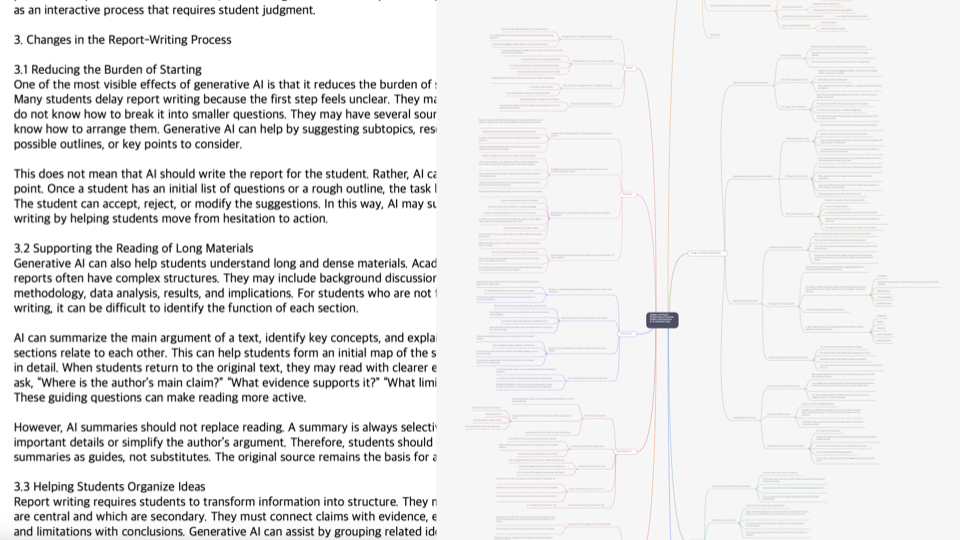
How to Use Brify: A Quick Guide for First-Time Users
Learn the basic Brify workflow: add your material, review the AI draft, edit the structure map, and reuse it for study, reports, and meetings.
When you open Brify for the first time, it can be hard to know what to add first. You may have papers, PDFs, YouTube transcripts, meeting materials, or reports, but trying to use every feature at once can make the workflow feel heavier than it needs to be. The key to using Brify is not simply shortening long material. It is turning it into a structure map that you can return to later.
When Brify Is Most Useful
Brify is useful when you need to read a long material and rebuild its main flow. It works well for a paper you want to use in a literature review, a PDF report where you need key evidence, a lecture video you want to review, or meeting materials that need to become clear agenda items.
If all you need is a one-paragraph summary, a simple summarizer may be enough. But if you need to check evidence later, turn the content into an outline, compare it with other sources, or reuse it in a meeting, a structure map is more helpful.
What Should You Add First
For your first use, choose one material with a clear boundary. A single paper, one PDF, one meeting document, or one lecture transcript is easier to review than a large folder of mixed materials.
Before adding the material, write your purpose in one sentence. For example: 'I want to see whether this paper is useful for my literature review' or 'I want to find the decisions hidden in this meeting document.' A clear purpose gives you a standard for judging the structure map.
How Not to Overtrust the AI Draft
The AI draft in Brify is a starting point. It can quickly show the main topics and subtopics, but that does not mean every conclusion is fully verified.
When you review the draft, do not look only at the conclusion. Check whether the evidence is visible, whether important claims need source review, and whether any part should be marked as uncertain.
What to Check in the Structure Map
A useful structure map separates the core question, main topics, supporting evidence, examples, and limitations. If everything appears at the same depth, the map may become hard to reuse.
Node names matter too. Instead of keeping long AI-generated sentences, rename nodes by their role, such as 'main claim,' 'evidence,' 'counterpoint,' or 'needs review.' That makes the map easier to use later.
Reuse Brify Results for Study, Reports, and Meetings
A structure map should not stop at storage. For study, it can become review questions. For reports, it can become an outline and evidence list. For meetings, it can become agenda items and open issues.
Start small. Turn one material into a structure map, then reuse that structure in your next task. That is where Brify becomes more than a summary tool.
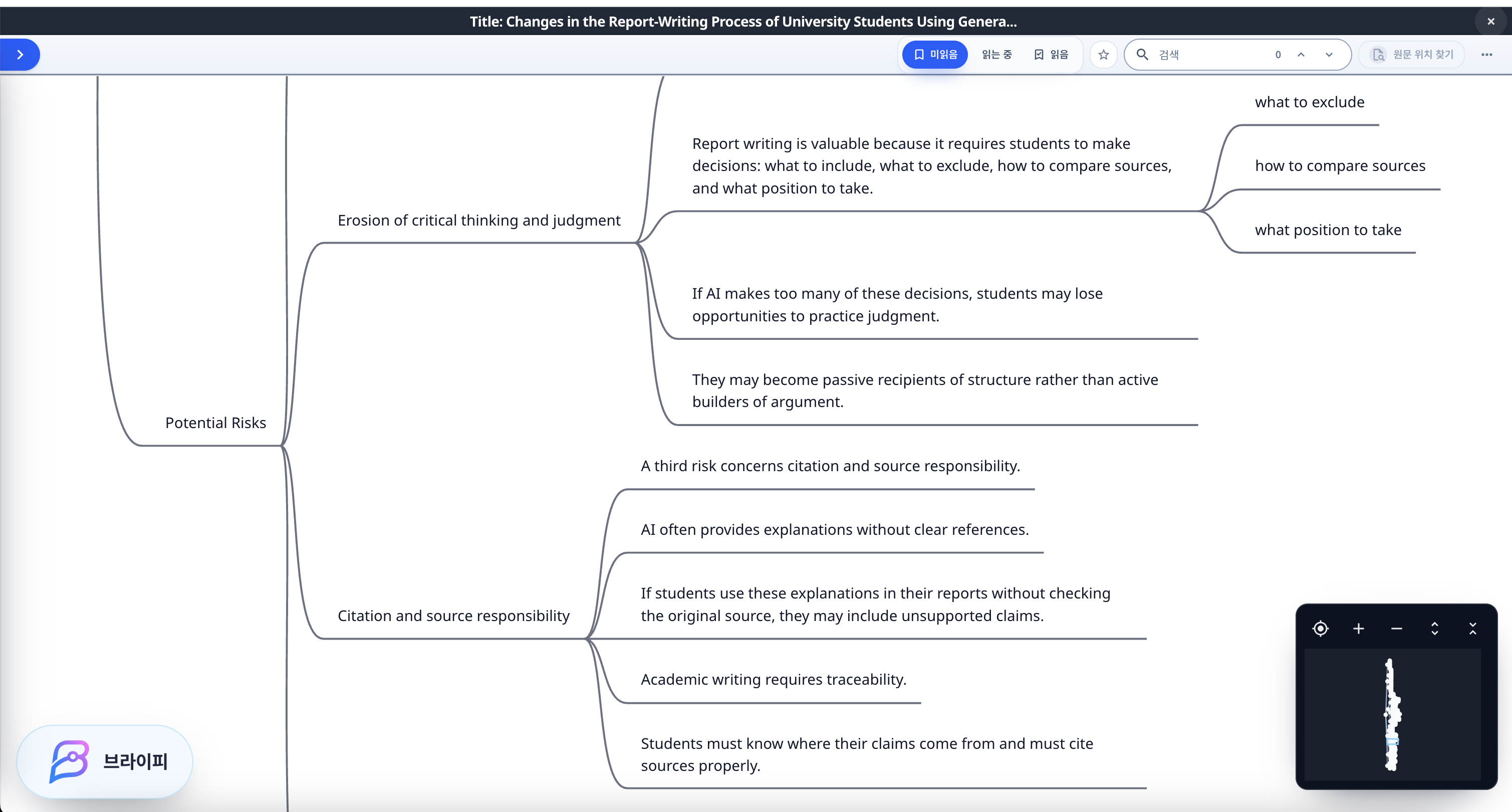
What to Remember When Making a Structure Map in Brify
The most important point in How to Use Brify: A Quick Guide for First-Time Users is that the AI output should not be treated as the final answer. Brify gives you a fast starting structure for long materials, but you still need to check whether that structure fits your purpose.
After adding your material, review the main titles, child nodes, evidence, examples, and parts that need verification. If a title is too broad, narrow it. If two nodes say nearly the same thing, merge them. If a conclusion has weak evidence, mark it for review.
Once you do that, the structure map becomes more than a summary. It becomes a working document you can reread, explain, turn into a report, or bring into a meeting.
A Checklist for First-Time Users
If you are working on how to use Brify today, check four things first: why am I organizing this material, what is the most important question, are the AI draft's conclusions separated from evidence, and where will I reuse this structure later?
When these four things are clear, the quality of the structure map becomes much more stable. The goal is not a perfect first result. The goal is to leave a structure you can review and improve.
Common Mistakes
The first mistake is trusting the result immediately after adding the material. AI can create a fast draft, but it may miss context or fail to mark the limits of the source clearly enough.
The second mistake is assuming that more nodes mean a better structure. A good structure map is not the one with the most branches. It is the one where the question, evidence, and next step are easy to see.
The third mistake is saving the structure map and never using it again. A structure map becomes more valuable when you turn it into review questions, a report outline, a meeting agenda, or a presentation flow.
Final Thoughts
You do not need to start Brify in a complicated way. Add one paper or PDF you already need to read, review the AI draft, and edit the structure so it fits your own purpose.