

How to Organize a Research Paper Before You Summarize It
Learn how to organize a research paper by research question, method, findings, and limitations before turning it into a simple summary.
The most common mistake when reading a research paper is starting with highlights. Highlighting can help, but paper organization starts with understanding the structure of the study, not collecting impressive sentences.
Why research papers are hard to organize
Research papers are dense because the problem, prior work, method, findings, interpretation, and limitations are spread across different sections.
If you treat every sentence with the same weight, the paper quickly turns into a pile of notes. A useful summary starts by separating the paper's structure.
Five things to check first
Before writing a summary, identify the research problem, research question, data or materials, method, main findings, and limitations.
These items give you a map of the paper. Once the map is clear, the details become much easier to place.
Why the abstract is not enough
The abstract is useful, but it compresses the study. It often leaves out the conditions, limits, and methodological details that make the findings meaningful.
If you plan to cite or reuse the paper, you need more than the abstract. You need a structure that points back to the original logic.
Connect question, method, and findings
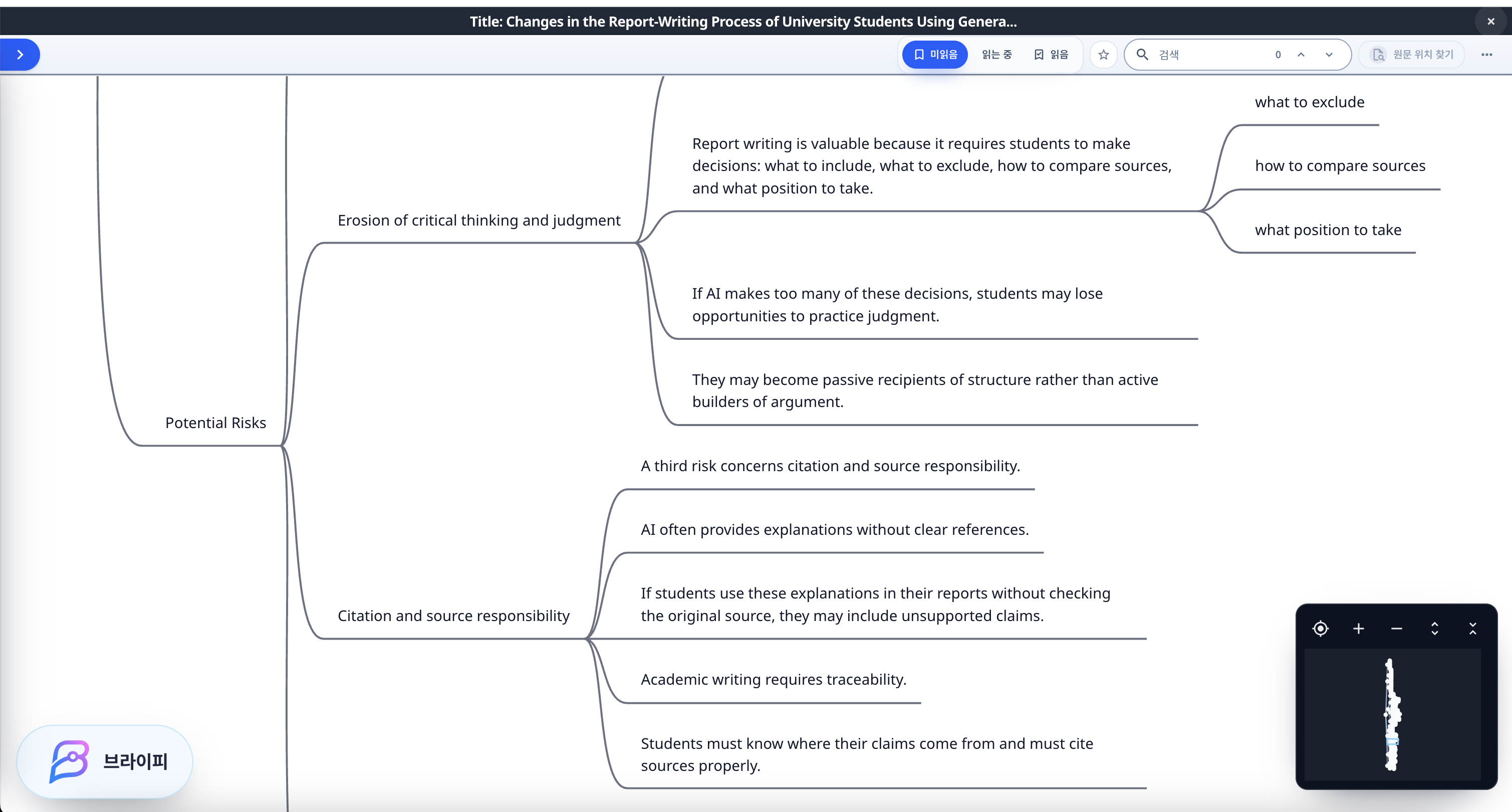
A paper becomes easier to understand when you connect what it asks, how it investigates the question, and what the evidence shows.
This connection is what turns a paper summary into a reusable research note.
How Brify helps
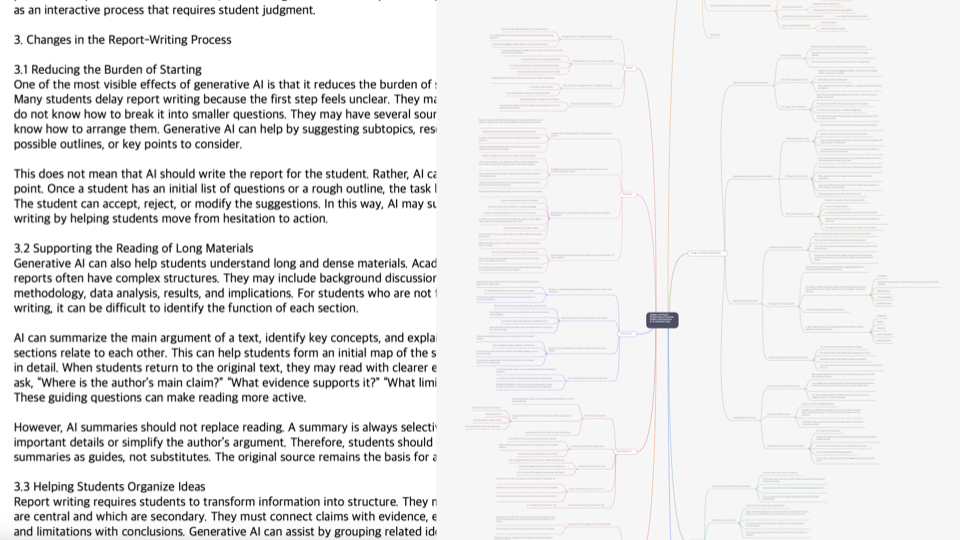
Brify turns long papers into editable structure maps. Instead of leaving you with one compressed paragraph, it helps separate the research question, method, findings, and limitations.
That structure is easier to review, edit, and reuse when you prepare a report, presentation, or literature review.
Final thoughts
Organizing a research paper is not the same as shortening it. If a plain summary feels too thin, use Brify to turn the paper into a structure map you can actually revisit.