

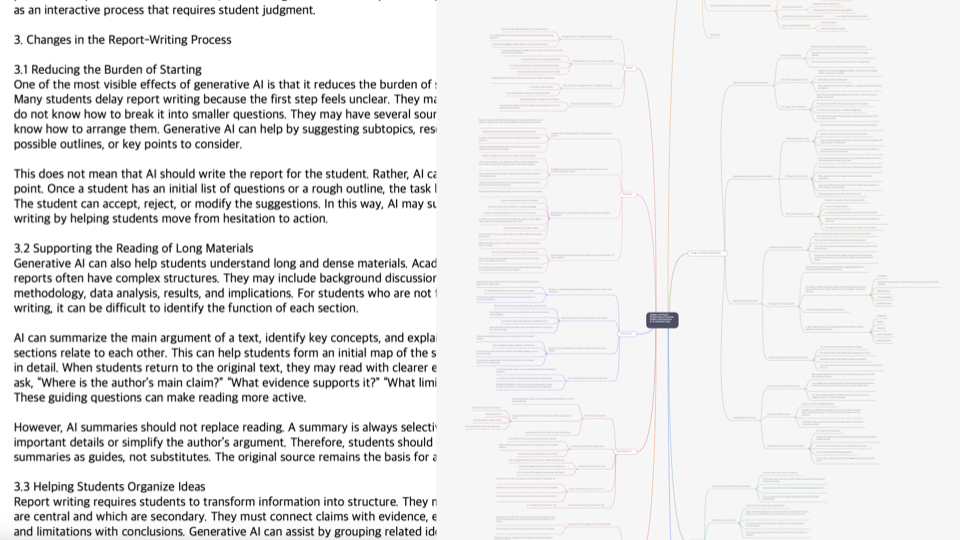
How to Make a Structure Map for Long Materials
Learn how to make a structure map by separating the core question, claims, evidence, examples, limitations, and next actions.
When people hear structure map, they often imagine a mind map with many branches. But the purpose of a structure map is not to create a pretty diagram. It is to make the question, claims, and evidence inside a long material visible again. Once you know how to make a structure map, papers, reports, meeting notes, and lecture notes become much easier to organize.
How a Structure Map Differs From a Mind Map
A mind map is useful for expanding ideas from a central keyword. It works well for brainstorming and exploring related concepts.
A structure map focuses on reorganizing existing material into meaningful relationships. The central question, claims, evidence, examples, and limitations matter more than the central keyword.
Find the Core Question First
The first step is to find the question the material is trying to answer. Ask: what is this paper trying to prove, what decision does this report support, or what should this meeting material help decide?
Without a core question, every sentence can look important. With a question, you can separate the main point from background information.
Separate Claims, Evidence, and Examples
When structuring a long material, separate claims from evidence. If you keep only conclusion sentences, it becomes hard to know later why those conclusions were reached.
Data, examples, quotations, and explanations all play different roles. A structure map should keep those roles visible so the material can be reused safely in a report or presentation.
Keep Limitations and Items to Verify Separate
A good structure map does not contain only confident statements. It should also mark unclear points, limitations, and parts that need source review.
This helps you avoid overtrusting an AI draft or your own first summary. A structure map should support both understanding and verification.
Create a Structure Map Draft in Brify
You can make a structure map manually, but long materials make the first classification slow. In Brify, you can add the material and quickly see a draft map of the core question, main topics, evidence, and points to review.
Then you can rename nodes, add missing evidence, merge similar branches, and remove items that do not fit your purpose.
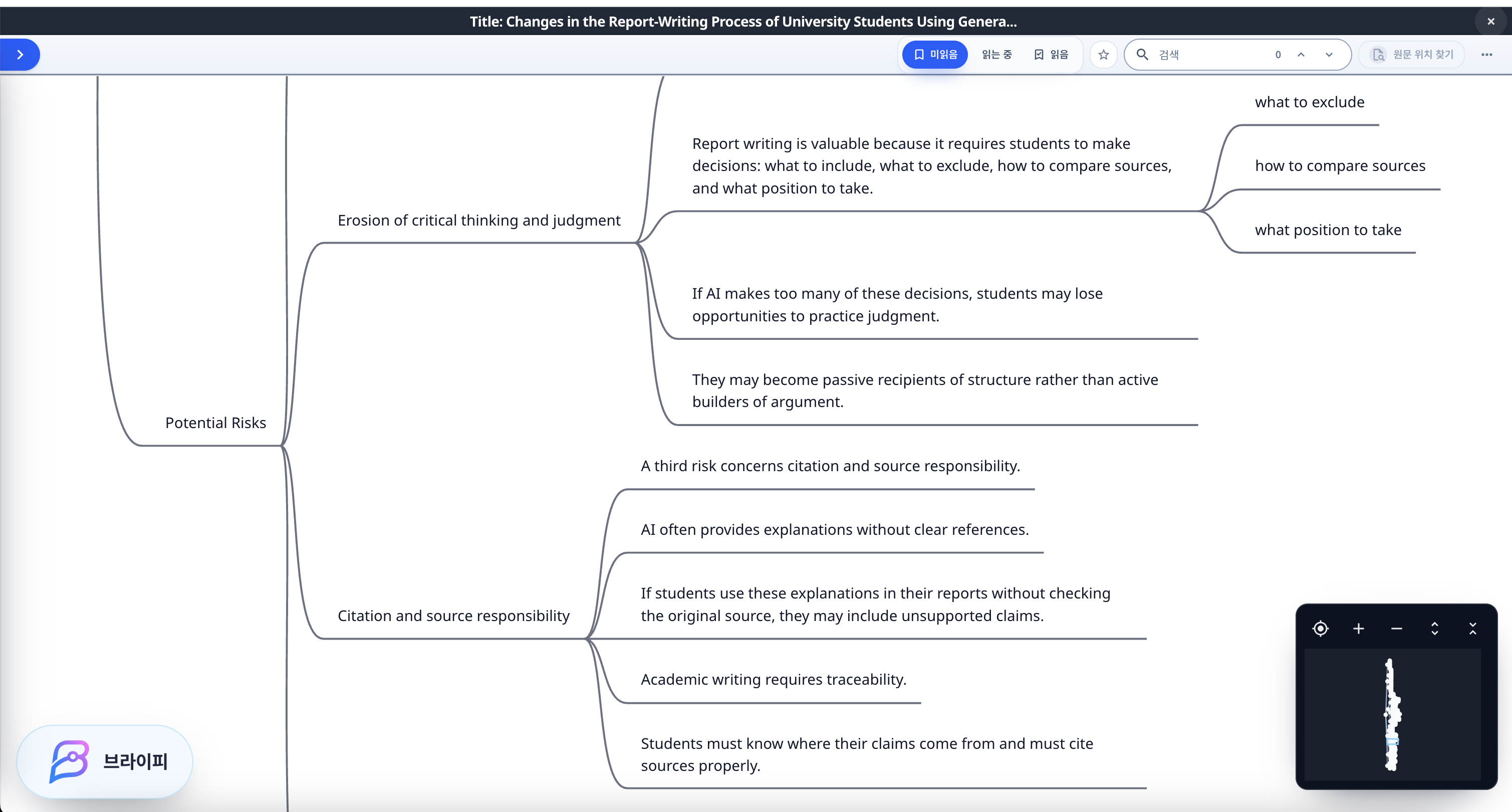
What to Remember When Making a Structure Map in Brify
The most important point in How to Make a Structure Map for Long Materials is that the AI output should not be treated as the final answer. Brify gives you a fast starting structure for long materials, but you still need to check whether that structure fits your purpose.
After adding your material, review the main titles, child nodes, evidence, examples, and parts that need verification. If a title is too broad, narrow it. If two nodes say nearly the same thing, merge them. If a conclusion has weak evidence, mark it for review.
Once you do that, the structure map becomes more than a summary. It becomes a working document you can reread, explain, turn into a report, or bring into a meeting.
A Checklist for First-Time Users
If you are working on how to make a structure map today, check four things first: why am I organizing this material, what is the most important question, are the AI draft's conclusions separated from evidence, and where will I reuse this structure later?
When these four things are clear, the quality of the structure map becomes much more stable. The goal is not a perfect first result. The goal is to leave a structure you can review and improve.
Common Mistakes
The first mistake is trusting the result immediately after adding the material. AI can create a fast draft, but it may miss context or fail to mark the limits of the source clearly enough.
The second mistake is assuming that more nodes mean a better structure. A good structure map is not the one with the most branches. It is the one where the question, evidence, and next step are easy to see.
The third mistake is saving the structure map and never using it again. A structure map becomes more valuable when you turn it into review questions, a report outline, a meeting agenda, or a presentation flow.
Final Thoughts
The key to making a structure map is not creating many branches. It is preserving the relationships between question, claim, evidence, and limitation. Use Brify to turn long material into a structure you can actually review.