

How to Find the Important Parts in Long Videos
Find important parts in long videos by using titles, chapters, transcripts, repeated keywords, and question-based scanning.
You do not always need to watch a long video from beginning to end. The goal is not to skip thinking, but to find the section that answers your question.
When You Do Not Need the Whole Video
Product reviews, lectures, interviews, and webinars often concentrate useful information in specific sections.
If your purpose is clear, finding the right section can be more efficient than full viewing.
Start With the Question You Need Answered
Before scanning a long video, define what you are looking for.
Without a question, every section can feel important.
Use Chapters and Transcripts as Clues
Chapters, descriptions, and repeated transcript keywords are useful signals.
They help you locate sections where a topic is discussed in depth.
Use Repeated Keywords Carefully
Repeated keywords often point to the central topic.
But repetition alone is not enough; check whether the keyword connects to a conclusion or example.
Save Rewatch Sections in Brify
In Brify, you can save important sections with the reason they matter.
Pairing timestamps with key questions makes later review faster.
A Practical Workflow
To apply how to find the important parts in long videos in real work or study, first stop treating the video as something you must watch from beginning to end. A video moves in time, but useful knowledge needs to be saved by topic, question, concept, example, and conclusion.
First, decide why you are summarizing the video. Are you studying, preparing a report, collecting ideas, comparing products, or trying to understand the main point quickly? The purpose changes what you should keep.
Second, scan the title, description, chapters, and transcript. Look for the question the video is trying to answer. Third, separate the main claim or concept, supporting reasons, examples, sections to rewatch, and points that still need checking.
Fourth, do not turn the whole video into a long transcript note. Rebuild it into a structure you can search, review, and reuse later. This is especially important for long videos and lecture videos, where concepts, examples, questions, and checklists need to stay connected.
How to Structure It in Brify
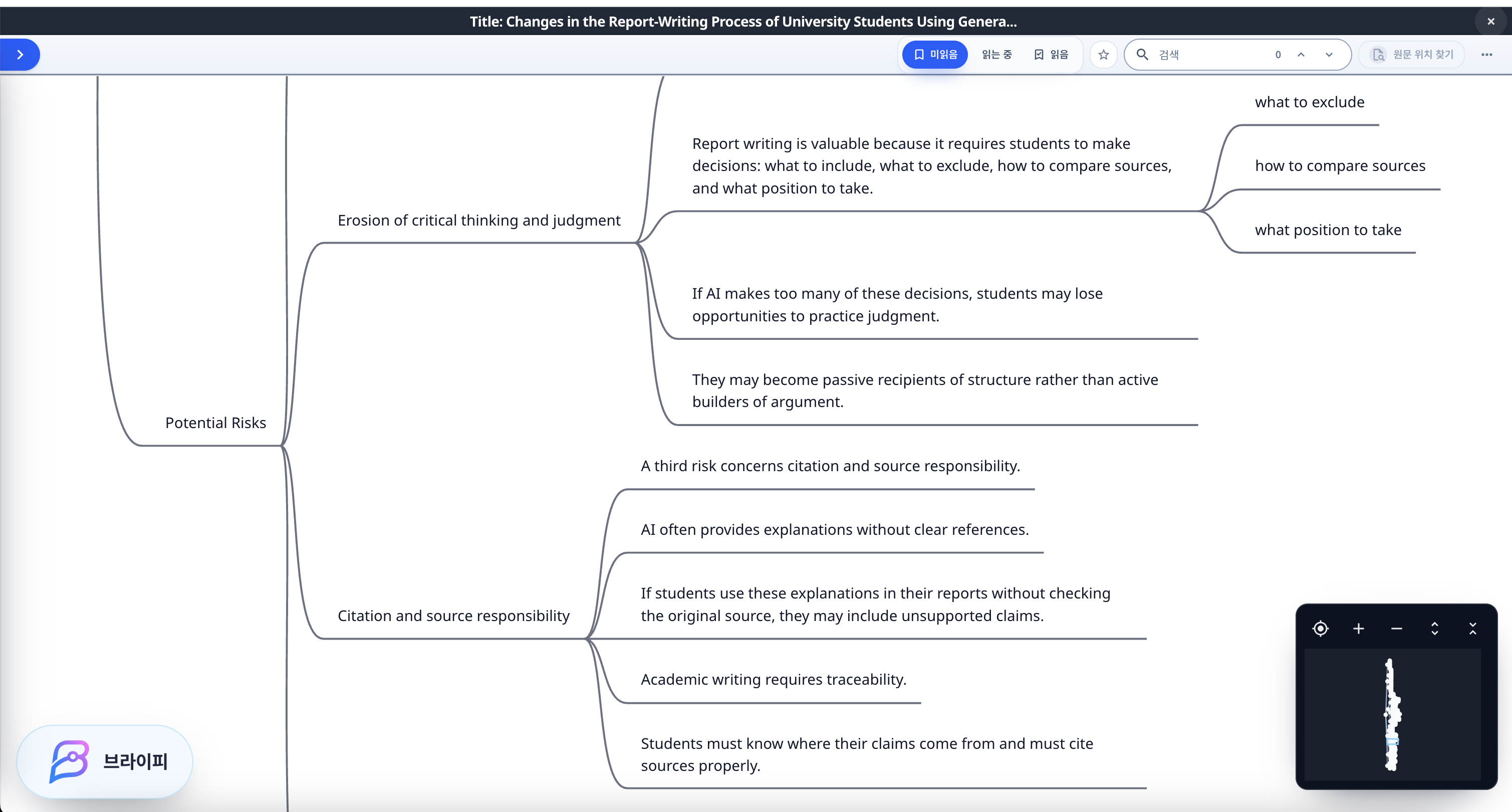
In Brify, you can organize long video summary with nodes such as video purpose, key question, main concepts, important examples, sections to rewatch, points to verify, and next actions.
This keeps the video from disappearing into a short paragraph. You can see what the key idea is, which example explains it, which section deserves another look, and how the video can be used later.
A structure map is also useful when you use AI summaries. Even if the AI output sounds fluent, transcripts may contain errors, context may be missing, conclusions may be overstated, and important examples may be skipped. Brify lets you separate the summary from the parts that still need review.
Common Mistakes
The first mistake is reducing the entire video to one paragraph. That may help you scan quickly, but it is weak when you later need evidence, examples, timestamps, or study notes.
The second mistake is trusting the transcript too much. Auto-generated captions can miss names, technical terms, speaker changes, and context. A transcript summary should be checked against the important parts of the video.
The third mistake is summarizing lecture videos and general YouTube videos in the same way. Lecture videos need concepts, definitions, examples, practice questions, and review prompts. General YouTube videos may need claims, cases, conclusions, and useful sections.
What to Do Today
If you want to start working on long video summary today, choose one video and write only three things first: what question does this video answer, which section should I rewatch, and what part can I actually use for my work or study?
Then place the key question at the center of a Brify map and connect concepts, examples, reasons, and rewatch sections around it. You do not need to organize the whole video perfectly. What matters is leaving a structure that helps you regain the context later.
Video organization is not about saving more videos. It is about making the videos you already watched findable and useful again.
Final Thoughts
To find the important parts in a long video, start with a question. Use Brify to keep the useful sections and the reason for saving them.