

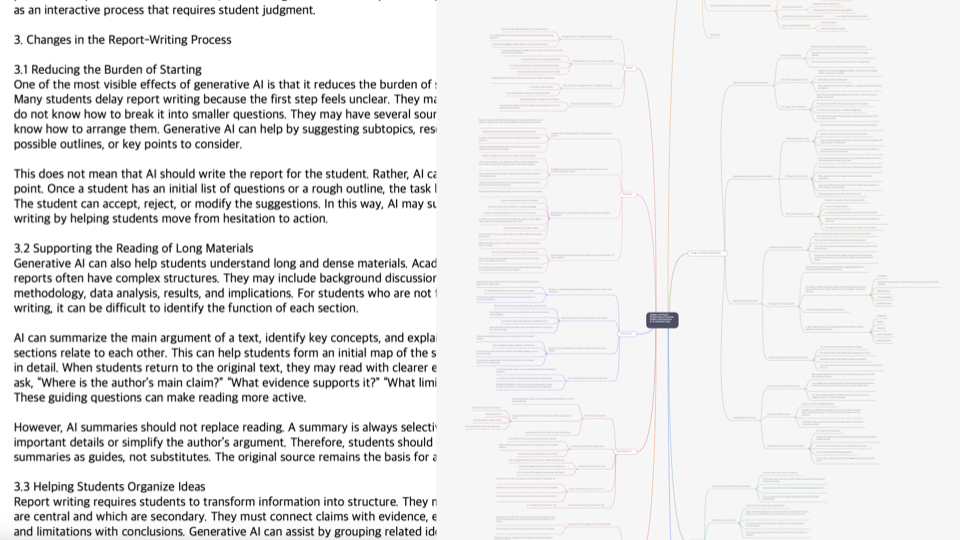
A Checklist for Reviewing Assignment Material Summaries Before Submission
Before submitting an assignment, check summary accuracy, sources, interpretation, claim-evidence links, outline flow, and citation readiness.
Right before submitting an assignment, it is easy to focus only on grammar, formatting, or word count. But in a source-based assignment, the more important question is whether the summary is accurate, the sources are visible, and your claims are connected to evidence. A submission checklist should check the logic of your materials, not only the surface of the writing.
What People Often Miss Before Submission
Many students polish sentences at the end but do not check the structure of the materials. A paragraph can sound natural while still lacking evidence or clear citation.
If you used AI summaries or multiple source summaries, you should especially check where each important idea came from.
Check Whether the Summary Answers the Assignment Question
A summary can be clear and still fail to answer the assignment question. Look at each paragraph and ask how it connects to the task.
Remove or shorten explanations that do not support the question, and make key claims and evidence more visible.
Check Sources and Citation Marks
Sources take a long time to recover if you leave them until the end. Before submission, check whether every key claim has a source and whether direct quotes and paraphrases are separated.
If your materials include web pages, articles, academic papers, and lecture slides, the citation style may differ by source type.
Check Whether Claims and Evidence Are Connected
Treat the first sentence of each paragraph as the claim and check whether the following evidence is enough. If a claim is too strong, soften it or add support.
On the other hand, a paragraph that only summarizes sources without your own claim may need a clearer role in the assignment.
Review the Final Structure in Brify
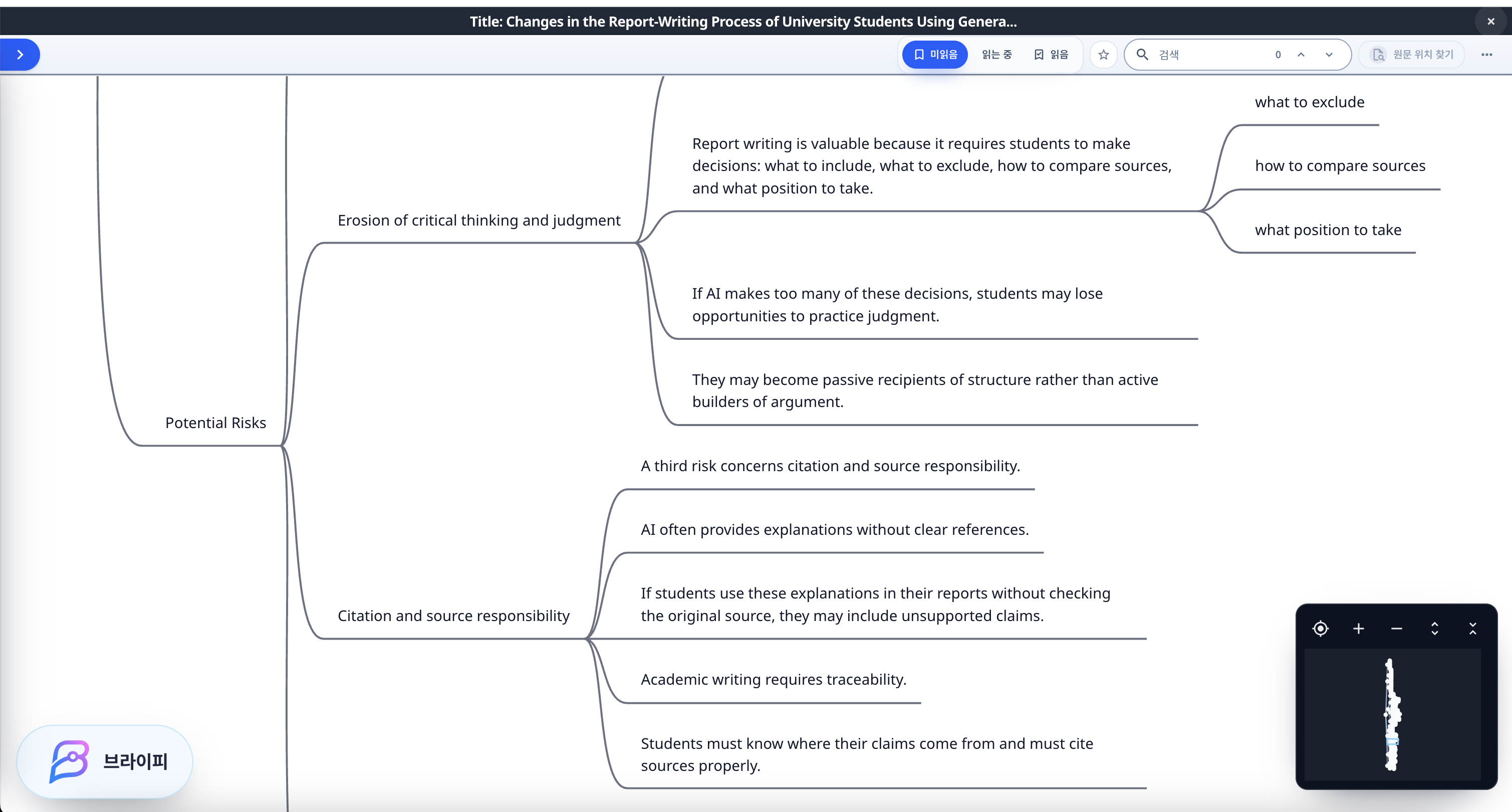
A Brify structure map shows the assignment question, claims, evidence, sources, and your interpretation in one place. Structural problems are often easier to find in a map than in a finished paragraph.
Even a short final review can reveal missing sources, repeated points, or claims that need stronger evidence.
Turning Materials Into a Submission-Ready Structure in Brify
The most important point in A Checklist for Reviewing Assignment Material Summaries Before Submission is that collecting materials and using them well are not the same thing. A report or assignment is not a list of sources. It needs to show how you understand the question, which claims you are making, and what evidence supports those claims.
In Brify, you can organize materials into a structure map with nodes such as assignment question, main claim, supporting source, citation point, your interpretation, outline candidate, and sentence ideas for the final report or presentation. This keeps an AI summary from becoming the final answer too quickly.
When you work with multiple sources, citations can get mixed together, similar ideas repeat, and the evidence you actually need may be missing. A structure map makes it easier to see which source supports which claim, where the gaps are, and what should be removed before you write.
When a Structure Map Helps Most
A structure map becomes especially useful when you have enough material but cannot build a report outline, when an AI summary is available but you cannot tell what came from the original source and what is your own interpretation, or when team project materials are scattered across messages, documents, and links.
It also helps when you are close to submission and suddenly need to find citations again. At that point, more summarization is usually not the answer. What you need is a clear connection between the assignment question, claims, evidence, and sources.
Pre-Submission Checklist
If you are working on assignment submission checklist today, check four things: does this material directly answer the assignment question, does each claim have evidence and a source, are the original summary and your interpretation separated, and can the structure be turned into a report outline or presentation flow?
If those four things are not visible, the material is not fully ready for submission yet. Turning it into a Brify structure map connects understanding, citation checking, outline building, and presentation preparation in one workflow.
Final Thoughts
A pre-submission review is there to reduce anxiety. Check in Brify whether question, claim, evidence, and source are connected, then submit with more confidence.