

AI Summary Tool Recommendation: 7 Criteria to Check First
Learn how to choose an AI summary tool by checking material type, source review, structure, editability, and reuse.
Once you start searching for an AI summary tool, the choices quickly become overwhelming. Some tools focus on PDFs, some on YouTube or meeting notes, and others promise to make long documents extremely short. But the first question should not be how short the summary becomes. The better question is whether you can review, edit, and reuse the result in your next task.
Start With the Purpose Before Choosing a Tool
Before choosing a summarizer, decide why you are summarizing the material. A study summary, a literature review summary, and a meeting action summary all need different features.
Without a purpose, the shortest and smoothest summary looks attractive. But for important material, evidence, limitations, and points to verify matter more than shortness.
Check Which Material Types the Tool Handles Well
AI summary tools vary by material type. Some work best with pasted text, some with PDFs, some with video transcripts, and some with meeting notes.
Start by checking whether your usual material is a paper, PDF report, YouTube lecture, or meeting document. A tool can produce good summaries and still be inconvenient if it does not match your source type.
Source Review Matters More Than a Short Summary
An AI summary is a draft, not a final answer. For papers, reports, contracts, and meeting materials, making decisions from the summary alone can be risky.
A good tool should help you return to the source and check where the summary came from. A summary without a review workflow is fast, but not stable enough for serious use.
Can the Result Be Structured
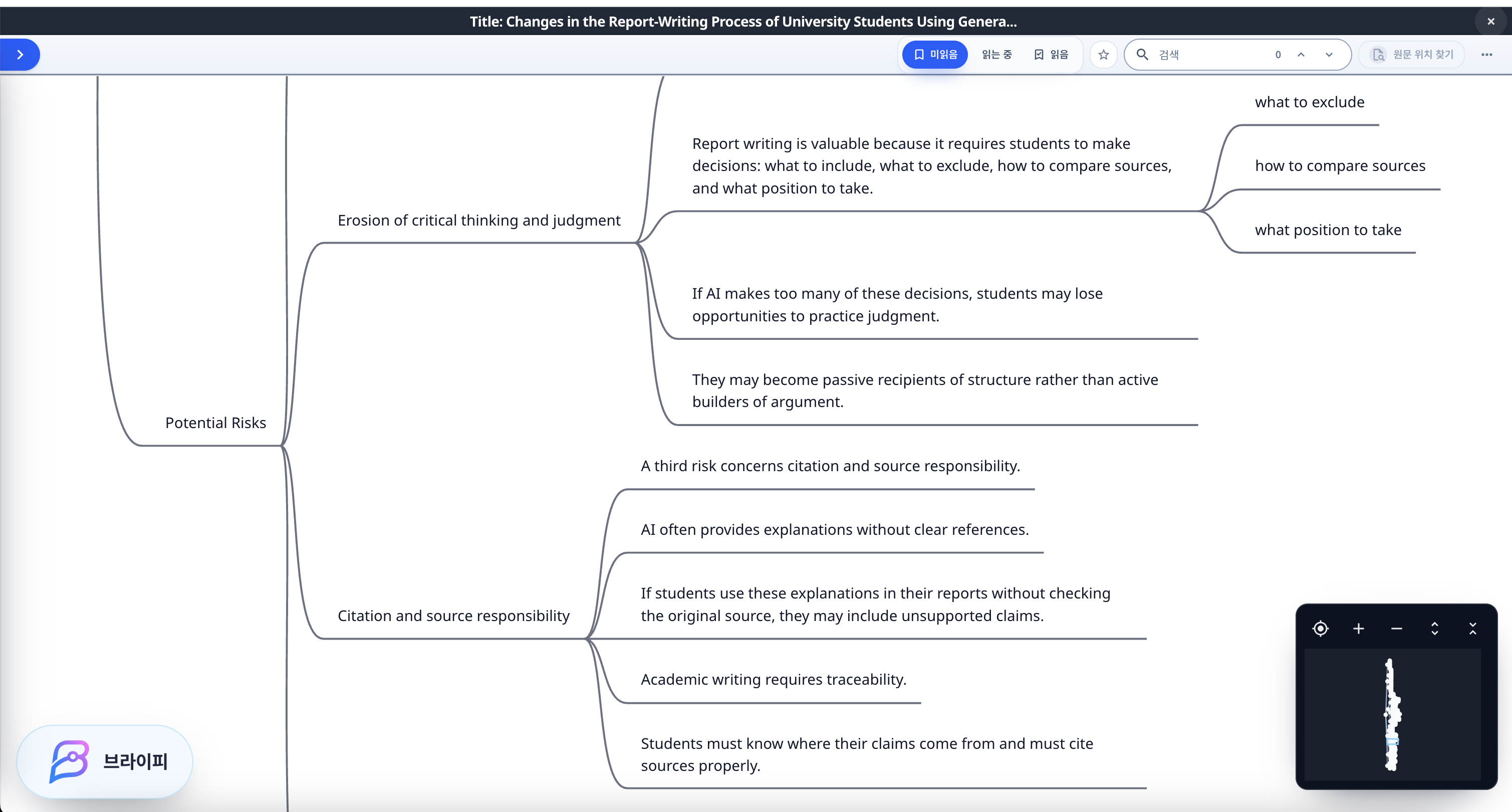
If a summary remains as one paragraph, it is hard to reuse. Study needs concepts and review questions, reports need claims and evidence, and meetings need decisions and action items.
Look for a tool that can separate the core question, claims, evidence, examples, limitations, and next actions. Structure is what turns a summary into working material.
Why Brify Fits Structured Summarization
Brify is built around turning long materials into reviewable structure maps, not just one short paragraph. It helps separate core questions, main topics, evidence, limitations, and items to revisit.
When choosing an AI summary tool, do not only ask whether it summarizes quickly. Ask whether the result can support study, writing, and meetings afterward.
The Risk of Trusting AI Summaries Too Quickly
AI summaries often read naturally, which makes them feel correct. But natural wording and accurate understanding are not the same thing. Important conclusions may be omitted, weak evidence may sound stronger than it is, and source conditions may disappear.
A good AI summary tool should therefore create a fast draft while leaving a structure that users can review. That is why Brify focuses on structure maps.
Final Thoughts
If you are looking for an AI summary tool recommendation, start with criteria rather than rankings. Try one paper or PDF in Brify and see whether the result becomes a structure you can actually review.